

Your top news on media and advertising
Provided by AGP
Deportations loom, but the future is still Latino as U.S. Latino GDP surpasses Japan to become World’s 4th largest GDP

Hard-working, self-sufficient, optimistic
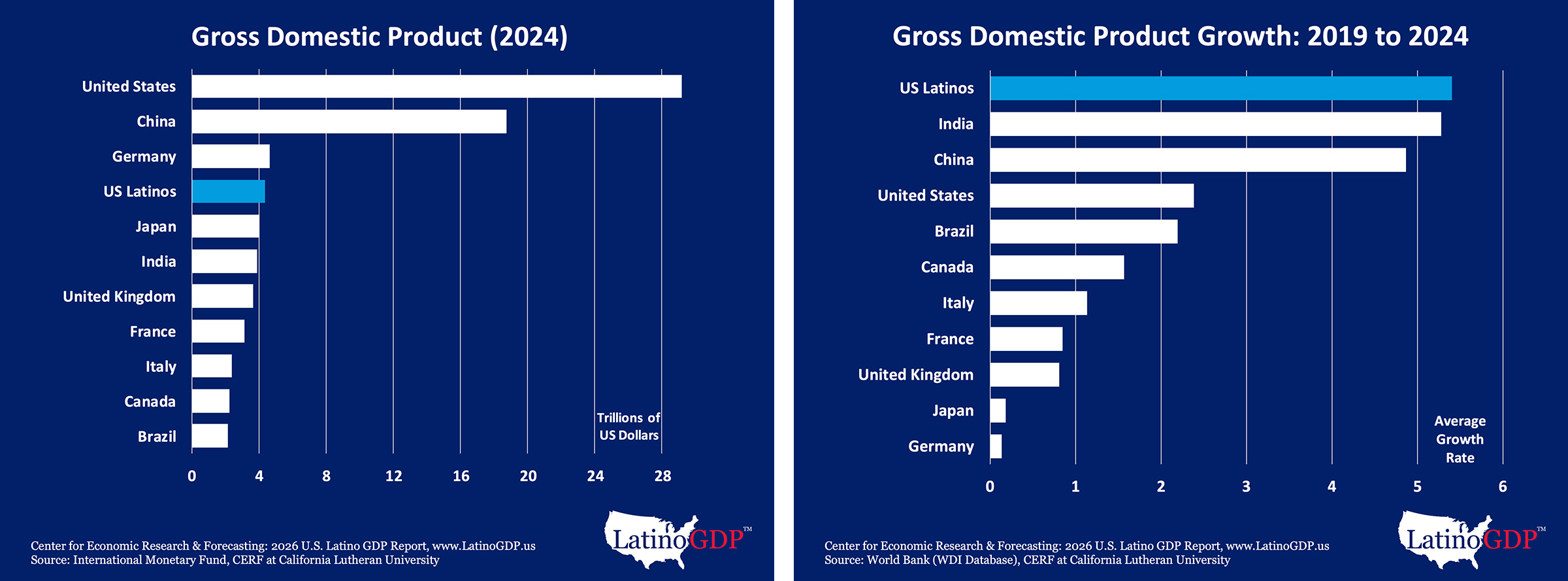
2024 U.S. Latino GDP is $4.4 trillion, representing the fourth largest GDP in the world and nearly 9 percent larger than the GDP of Japan. Since 2019, the Latino GDP is the single fastest growing among major economies, growing even faster than India’s.
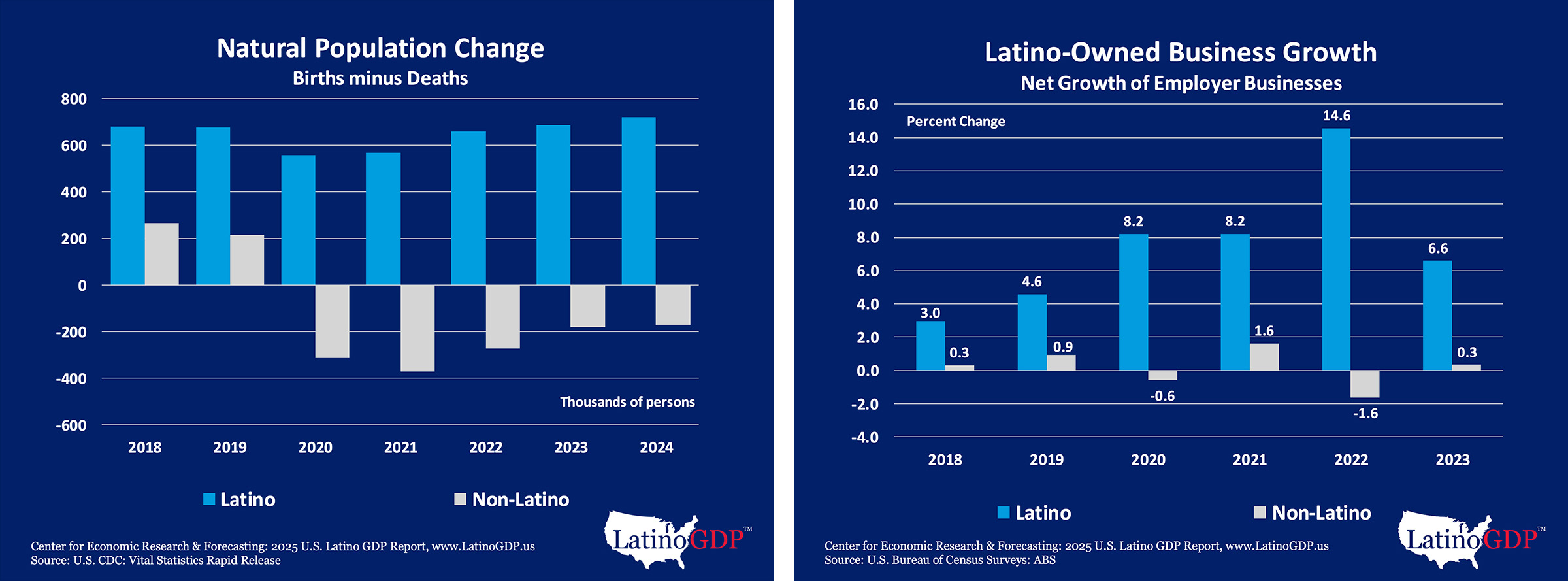
Rapid Latino population growth is driven largely by births, not immigration. Latino-owned employer businesses grew nearly 20 times faster than Non-Latino. In this way, Latinos are drivers of economic growth and job creation.
2026 U.S. Latino GDP Report: New report from researchers at UCLA and Cal Lutheran indicate that Latinos are key to a bright future for the United States.
LOS ANGELES, CA, UNITED STATES, May 5, 2026 /EINPresswire.com/ -- Latinos are and will continue to be key to America’s future, according to the latest Latino GDP report from UCLA and California Lutheran University researchers. U.S. Latino GDP reached $4.4 trillion in 2024. For the first time, the economic contribution of U.S. Latinos has surpassed the GDP of Japan, elevating the Latino GDP the World’s fourth largest GDP. Since the start of the COVID-19 pandemic, the Latino GDP is the single fastest growing among major economies, growing even faster than India and China.For the first time in history, one of every five people living in the U.S. is Latino. Latino population growth is driven largely by births, not immigration. From 2020 to 2024, Latino natural population increase (the number of births minus deaths) was 3.2 million, compared to a decline of 1.3 million for Non-Latinos.
The number of Latino-owned businesses grew nearly seven times faster than Non-Latino businesses from 2007 to 2023. The growth of Latino-owned employer businesses is even more remarkable. Latino-owned businesses which employ one or more workers grew nearly 20 times faster. In this way, Latinos are not only drivers of economic growth in the U.S., they are drivers of job creation.
“Now surpassing the GDP of Japan, the U.S. Latino GDP illustrates just how vital Latino strength and resilience are for the nation’s economy.” said Matthew Fienup, Executive Director of the Center for Economic Research & Forecasting at Cal Lutheran and coauthor of the report.
“New data indicate that the U.S. Latino GDP was not only larger and growing faster in 2024, but it shattered records for economic vibrancy,” said David Hayes-Bautista, Distinguished Professor of Medicine at UCLA and coauthor of the report. “Latinos are key to a bright future for the United States.”
The researchers acknowledge that recent deportation surges are taking a significant human and economic toll. However, they note that beyond being drivers of economic growth, U.S. Latinos are an important source of resilience, even when historic challenges impact the broader economy.
“The resiliency of the Latino economy has proven itself time and time again,” noted Fienup.
“As with the Great Recession and COVID-19, Latinos will press through these challenges and continue to drive economic growth, benefitting all Americans,” said Hayes-Bautista. “The future is still Latino.”
Additional findings:
• 2024 U.S. Latino GDP is $4.4 trillion, representing the fourth largest GDP in the world. U.S. Latino GDP is now nearly 9 percent larger than the entire economy of Japan.
• Growth of real Latino GDP was 6.4 percent in 2024, compared to only 2.4 percent for Non-Latino GDP. Since the start of the COVID-19 pandemic, the Latino GDP is the single fastest growing among major economies, growing even faster than India’s.
• The U.S. Latino population is now over 68 million. For the first time in history, one out of every five people living in the United States is Latino. Latinos’ population growth is currently 5.8 times as fast as growth of the Non-Latino population.
• There were 35.1 million Latinos in the U.S. labor force in 2024, up 46.5 percent since 2010. The Latino labor force grew 7.2 times faster than Non-Latino over this period.
• In 2024, Latino consumption stood at $3.0 trillion. Latinos in the U.S. represent a consumption market 25 percent larger than the entire economy of Italy and 32 percent larger than Canada.
The 2026 U.S. Latino GDP Report is the latest in a series of reports which document the large and rapidly growing economic contribution of Latinos living in the United States. It is also the 32nd full-length report that the Latino GDP Project has produced as part of an ambitious research initiative which analyzes the contributions of Hispanic males and females across various geographies
To download the full report, please visit: www.LatinoGDP.us
The 2026 U.S. Latino GDP Report is produced by the Latino GDP Project, a project of Community Partners (www.CommunityPartners.org) with the Center for Economic Research & Forecasting at California Lutheran University (www.clucerf.org) and the Center for the Study of Latino Health & Culture at UCLA (www.uclahealth.org/ceslac). For questions about the report, please contact: Matthew Fienup, Chief Economist (mfienup@callutheran.edu); and David Hayes-Bautista, Chief Demographer (dhayesb@ucla.edu).
History of the Latino GDP Project
The effort to calculate the Latino GDP began with David Hayes-Bautista in the early 2000s. His idea was to use established government data programs to calculate a robust summary statistic for the economic performance of U.S. Latinos. The original U.S. Latino GDP algorithm was developed by Hayes-Bautista with Werner Schink, former Chief Economist of the California EDD. They produced the inaugural U.S. Latino GDP Report in 2017. After Schink’s untimely passing, Hayes-Bautista sought out Cal Lutheran economists Dan Hamilton and Matthew Fienup. Hayes-Bautista, UCLA colleague Paul Hsu, Hamilton, and Fienup made refinements to the Latino GDP methodology and have produced annual Latino GDP Reports every year since 2019.
With generous support from Bank of America, the Latino GDP Project was significantly expanded beginning in 2021 and now includes calculation of the Latino GDP for targeted states and major metropolitan areas as well as the inaugural Latina GDP Report, released in August 2024. For more information and to access reports, visit www.LatinaGDP.us and www.LatinoGDP.us
Matthew J Fienup
Latino GDP Project
+1 805-493-3668
email us here
Visit us on social media:
YouTube
Legal Disclaimer:
EIN Presswire provides this news content "as is" without warranty of any kind. We do not accept any responsibility or liability for the accuracy, content, images, videos, licenses, completeness, legality, or reliability of the information contained in this article. If you have any complaints or copyright issues related to this article, kindly contact the author above.
