

Selecting a Top 10 Stadium LED Flood Light Supplier: From Lumen Output to UL and ETL Compliance
1. The High-Efficiency Benchmark: Why 150-180lm/W is the New Standard for Stadiums
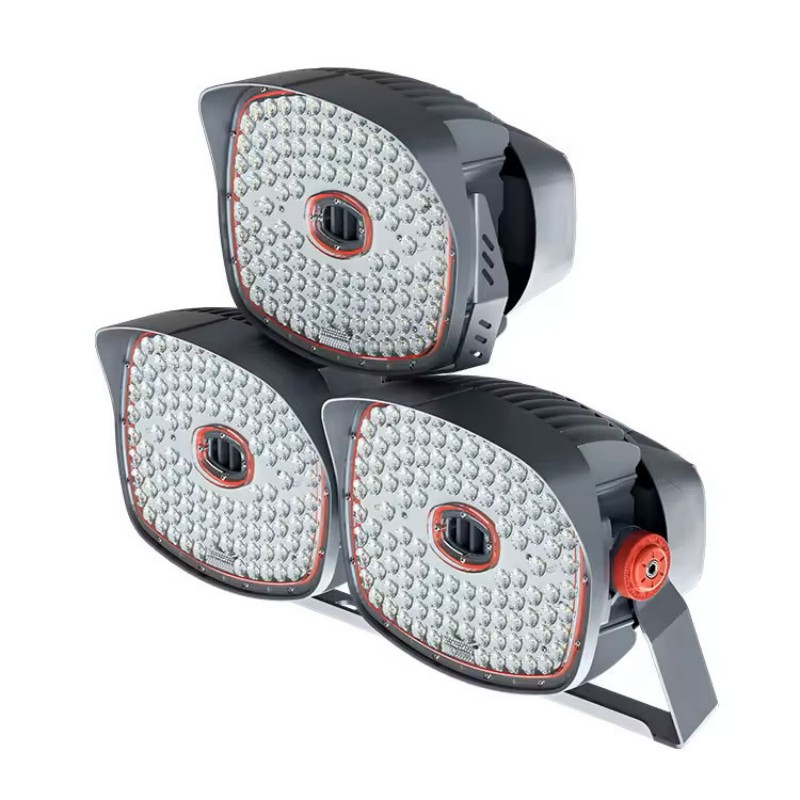
In the context of massive sports complexes, energy consumption represents a significant portion of operational overhead. Modern engineering has shifted the focus from raw wattage to luminous efficacy, which measures how much light a fixture produces per watt of electricity. Leading suppliers now offer floodlights reaching the 150-180lm/W threshold, a benchmark that significantly reduces power demand without sacrificing visibility. Starslighting provides a comprehensive range of high-efficacy series, spanning from 200W to 1600W, to address varying stadium sizes and mounting heights.
Higher efficacy directly translates to a lower thermal load on the internal LED chips. When a light converts more energy into visible light rather than heat, the components experience less stress over time. This efficiency is critical for stadiums that host frequent night events or operate in regions with high electricity costs. By selecting fixtures that meet these high-lumen standards, facility managers can achieve faster returns on investment through reduced utility bills. Furthermore, lower power consumption allows for the use of smaller gauge wiring and more efficient electrical distribution systems during the construction phase.
2. Mastering Heat Dissipation in High-Power Arrays: The Dual-Module Advantage
High-power LED floodlights, particularly those exceeding 1000W, generate substantial internal heat that can compromise electronic longevity. Effective thermal management remains the most critical engineering challenge in the stadium lighting industry. Many top-tier manufacturers utilize modular designs to facilitate better airflow and cooling. Changzhou Starslighting Technology CO.,LTD. employs a double-module architecture in its high-power floodlight series to maximize heat dissipation surface area. This design allows for rapid cooling even during prolonged operation in challenging environments like tunnels or enclosed sports arenas.
Structural integrity and material choice play a vital role in heat regulation. Aluminum alloy housings with integrated fin structures act as efficient heat sinks, drawing warmth away from the sensitive LED drivers and emitters. Without these advanced cooling mechanisms, high-output lamps would suffer from rapid lumen depreciation, leading to uneven lighting on the playing field. Durable thermal management ensures that the lighting system maintains its original brightness levels throughout its 50,000-hour or 100,000-hour lifespan. Consequently, modular engineering reduces the risk of unexpected failures and expensive maintenance downtime for stadium operators.
3. Visual Comfort and 4K Broadcast Standards: Managing Glare and Flicker
Modern sports arenas must cater to two primary audiences: the athletes on the field and the millions of viewers watching on high-definition screens. Achieving 4K broadcast quality requires more than just high light levels; it demands exceptional color accuracy and flicker-free performance. Professional suppliers prioritize high Color Rendering Index (CRI) and Television Lighting Consistency Index (TLCI) values. Starslighting (Changzhou Starslighting Technology CO.,LTD.) engineers its stadium series to provide stable, high-quality light that prevents the "strobe effect" during slow-motion replays.
Glare control is equally important for the safety and performance of the athletes. Excessive glare can distract players and cause visual fatigue, potentially leading to errors or injuries. Advanced optical lenses and visors help direct light exactly where it is needed while minimizing "spill light" that enters the eyes of spectators or nearby residents. Precision optics ensure that the playing surface remains uniformly illuminated, which is a prerequisite for professional league certifications. This commitment to visual comfort demonstrates a manufacturer's ability to handle the nuanced requirements of elite-level competitive environments.
4. The Compliance Moat: Reducing Liability with UL and ETL Ratings
For projects in North America and Europe, electrical safety certifications are not optional; they are a fundamental requirement for insurance and legal approval. UL and ETL ratings signify that the lighting hardware has undergone rigorous testing by independent laboratories to verify its safety and durability. Using uncertified equipment in a large-scale public venue exposes the stadium owner to massive liability risks and potentially voids insurance coverage. Starslighting maintains compliance with these international standards to ensure its products meet the legal requirements of global markets.
Compliance also involves ingress protection (IP) ratings, which determine how well a fixture resists dust and water. Stadium lights must endure heavy rain, high humidity, and even corrosive salt air in coastal locations. An IP66 or IP67 rating ensures that the internal electronics remain sealed against the elements, preventing short circuits and corrosion. By sourcing from a manufacturer that prioritizes these third-party certifications, procurement officers can be confident in the structural and electrical reliability of their infrastructure. This regulatory adherence serves as a crucial differentiator between reputable exporters and low-cost, non-compliant alternatives.
5. From Romania to the World: Case Analysis of International Stadium Tenders
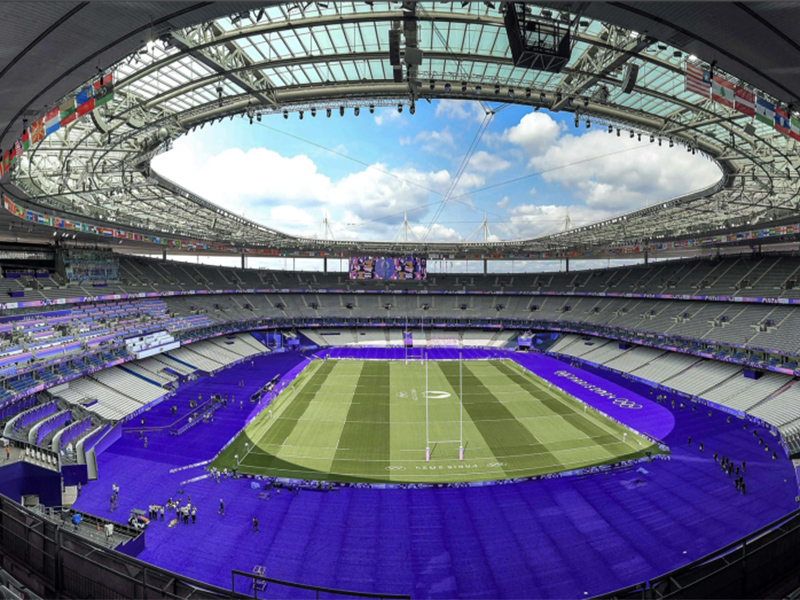
Practical field performance provides the most reliable evidence of a supplier's capability. International tenders often require a proven track record of successful installations in diverse geographical locations. For example, the Pierre Mauroy Stadium project in Romania utilized the ST-F009 series to achieve professional-grade illumination. This project highlights the importance of scalability, as the manufacturer provided modular units that were tailored to the specific geometry of the venue. Such case studies demonstrate that a supplier can handle the logistical and technical complexities of large-scale multinational projects.
The ability to adapt hardware to different pole heights and angles is a hallmark of a technical-first manufacturer. Whether a project requires 100W units for smaller training fields or 1600W arrays for international stadiums, the core technology must remain consistent. Starslighting (Changzhou Starslighting Technology CO.,LTD.) leverages its diverse project portfolio to refine its product designs based on real-world feedback. This iterative engineering approach ensures that new product generations solve the practical challenges faced by contractors during the installation and commissioning phases.
6. Project Visualization: Demanding DIALux and Photometric Integrity
The procurement process for stadium lighting has evolved into a data-driven discipline. Modern suppliers must act as technical consultants by providing professional project visualizations before any hardware is purchased. Using DIALux software, engineers create digital twins of the stadium to calculate precise lux levels and light uniformity. This simulation relies on accurate IES files, which are digital fingerprints of a lamp’s performance. Without these detailed photometric reports, it is impossible to guarantee that the final installation will meet the required lighting standards.
Starslighting supports its global partners by offering comprehensive lighting design services. This technical support helps EPC (Engineering, Procurement, and Construction) contractors secure bids by providing a scientifically verified lighting map. Pre-installation simulations identify potential dark spots or areas of excessive glare, allowing for adjustments to the beam angles or fixture placement before construction begins. This level of transparency builds trust between the manufacturer and the client, ensuring that the final result perfectly matches the initial project specifications.
7. Supplier Resilience: Evaluating the Changzhou Manufacturing Ecosystem
Geographical manufacturing clusters offer significant advantages in terms of innovation and supply chain stability. Changzhou has established itself as a global hub for high-tech lighting production, housing a concentration of specialized component suppliers. This ecosystem allows Starslighting (Changzhou Starslighting Technology CO.,LTD.) to source high-quality raw materials and precision optics with minimal lead times. For international buyers, this proximity translates to faster delivery schedules and more agile responses to custom design requests.
Furthermore, a sustainable partnership requires a manufacturer that can provide long-term maintenance support and component availability. Sourcing from a resilient industrial hub ensures that the company will remain operational and capable of supporting its products for years to come. Evaluating a supplier’s manufacturing environment is just as important as inspecting the hardware itself. By choosing a partner within a stable and advanced manufacturing cluster, global distributors can minimize the risks associated with international logistics and quality control.
Conclusion: Selecting a Partner for the Next Generation of Sports Lighting
Choosing the right lighting partner for a stadium project is a decision that impacts energy costs, athlete safety, and the spectator experience for decades. A Tier 1 supplier must bridge the gap between high lumen output and rigorous safety compliance. This guide emphasizes the importance of looking beyond the price tag to evaluate thermal management, optical precision, and international certifications like UL and ETL.
As the sports industry continues to adopt 4K and 8K broadcasting technologies, the demand for high-performance lighting will only increase. Starslighting (Changzhou Starslighting Technology CO.,LTD.) remains committed to providing the engineered solutions necessary to meet these evolving standards. By prioritizing technical integrity and professional project support, the company helps sports venues achieve their vision of a brighter, more efficient future. Selecting a partner with a global track record is the most effective way to ensure the success of any large-scale lighting infrastructure project.
To explore the full range of stadium LED floodlighting solutions and professional technical support, please visit the official website: https://www.czstarslighting.com/.
Changzhou Starslighting Technology CO.,LTD.
Changzhou Starslighting Technology CO.,LTD.
+ +86 17305192737
info@czstarslighting.com
Visit us on social media:
X
Legal Disclaimer:
EIN Presswire provides this news content "as is" without warranty of any kind. We do not accept any responsibility or liability for the accuracy, content, images, videos, licenses, completeness, legality, or reliability of the information contained in this article. If you have any complaints or copyright issues related to this article, kindly contact the author above.
