

mEinstein Examines the Bear Case for Personal AI and the Questions the Category Must Answer
The company examines technical, economic, trust, and adoption challenges it believes the Personal AI category must address to support broader adoption.
Device-native AI does not have to mean device-only. The real challenge is deciding what intelligence belongs close to the user and how any heavier computation is governed.”
BOSTON, MA, UNITED STATES, July 17, 2026 /EINPresswire.com/ -- As Personal AI evolves from chat interfaces toward persistent assistance in everyday life, mEinstein is outlining the technical, economic, trust, and distribution challenges that it believes the category must address before broader adoption.— Prithwi Thakuri, CEO mEinstein
The topics discussed include mobile hardware and memory constraints, consumer AI economics, competition from operating-system providers, privacy and consent, user habit formation, and the need for enterprise buyers to derive measurable workflow value from permissioned intelligence.
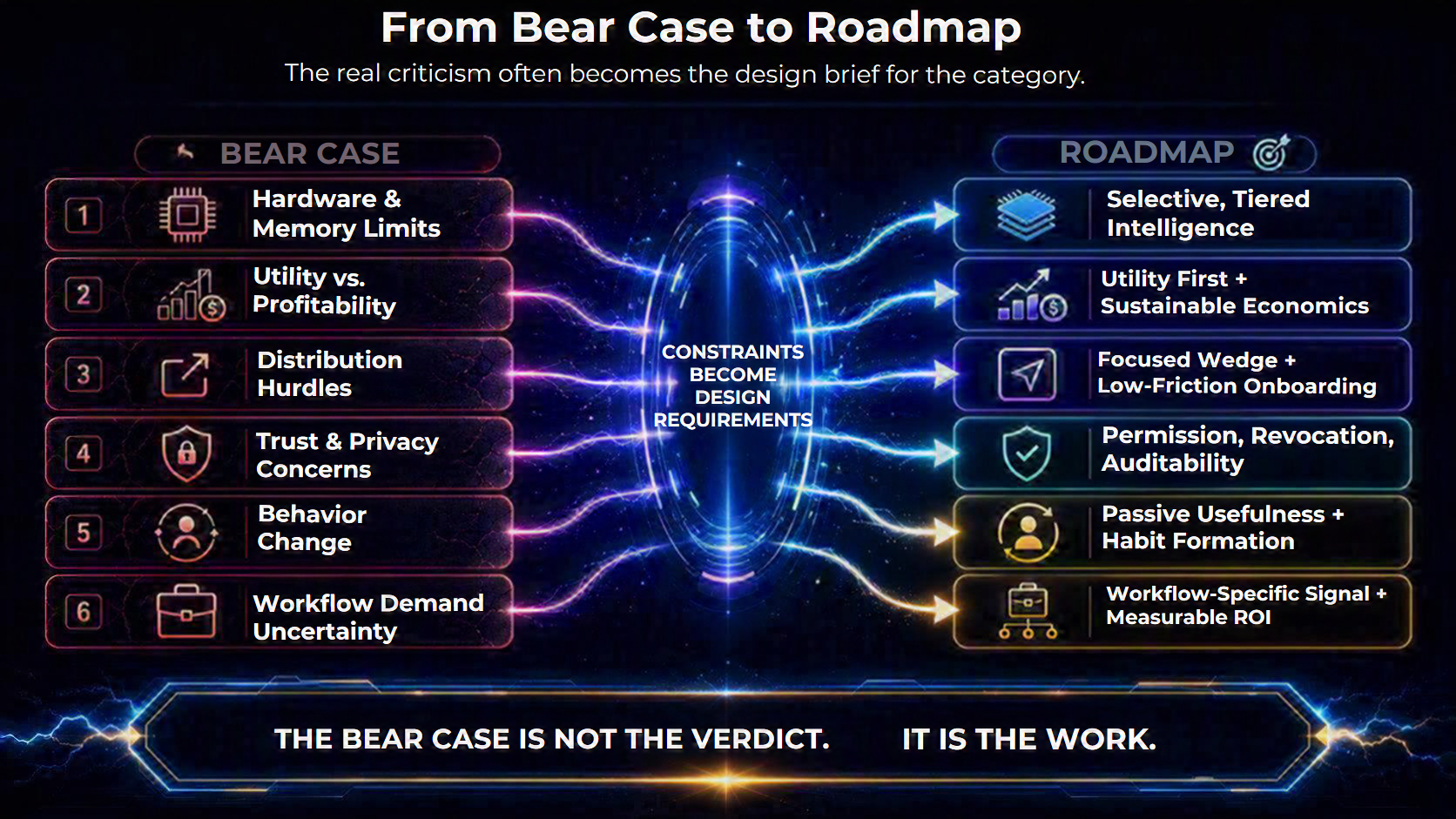
“The most useful part of a bear case is that it usually contains the roadmap,” said Prithwi R. Thakuria. “Every serious criticism points to an engineering, product, trust, distribution, or economic problem that has to be solved.”
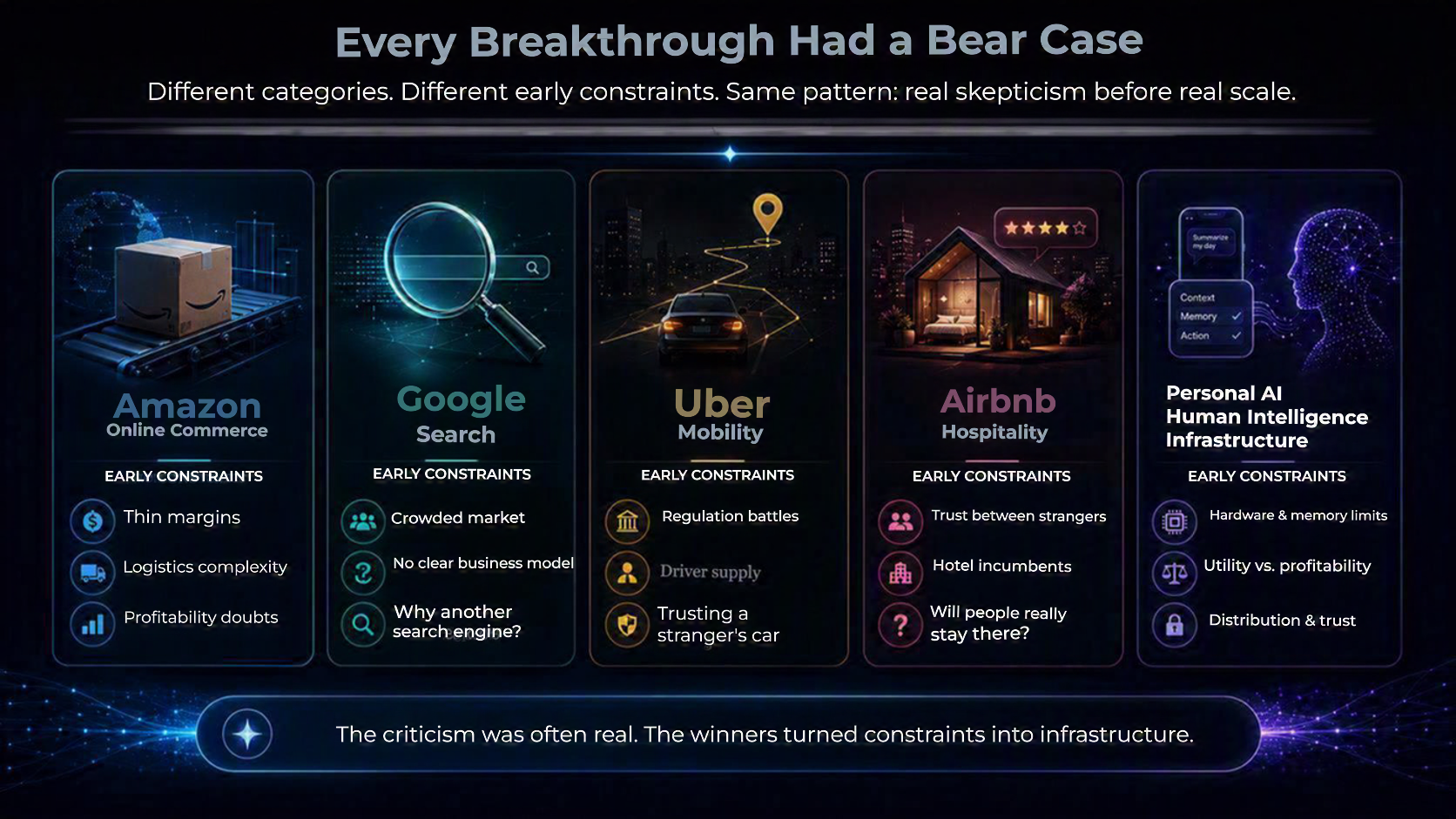
Historical platform shifts offer context but not certainty. Amazon faced questions about online retail economics and logistics. Google entered an established search market. Uber faced regulation and two-sided marketplace challenges. Airbnb had to build trust between strangers. Their later success does not predict the outcome of any Personal AI company, but it illustrates how genuine constraints can become product and infrastructure problems rather than permanent barriers.
One major concern is whether smartphones can support persistent personal intelligence. mEinstein’s view is that device-native AI does not require placing the largest model or a lifetime of raw data on one phone. The category is more likely to use selective memory, structured context, efficient local models, and carefully governed access to heavier computation.
The company also cautions against presenting personal-data participation as guaranteed income. mEinstein’s commercial model begins with user utility and workflow-specific enterprise programs, with broader market participation considered a later stage of the model.
“User income should never be presented as guaranteed,” said Thakuria. “The sequence has to be utility, trust, permission, and then value—supported by real enterprise demand.”
mEinstein describes its platform as a mobile-native Edge Consumer AI OS centered on device-native context, user-controlled intelligence, and permissioned enterprise workflows. The company does not position the platform as a replacement for frontier cloud assistants used for complex coding, broad research, or heavy content generation.
According to the company, Personal AI should be evaluated using measures such as Time-to-Utility, retention, privacy clarity, consent comprehension, affordability, enterprise outcomes, repeatable revenue, and independent validation.
Historical precedent does not make Personal AI inevitable. It does, however, make the category's roadmap clearer.
Mark Johnson
mEinstein
+1 703-517-3442
email us here
Visit us on social media:
LinkedIn
Instagram
Facebook
X
Legal Disclaimer:
EIN Presswire provides this news content "as is" without warranty of any kind. We do not accept any responsibility or liability for the accuracy, content, images, videos, licenses, completeness, legality, or reliability of the information contained in this article. If you have any complaints or copyright issues related to this article, kindly contact the author above.
